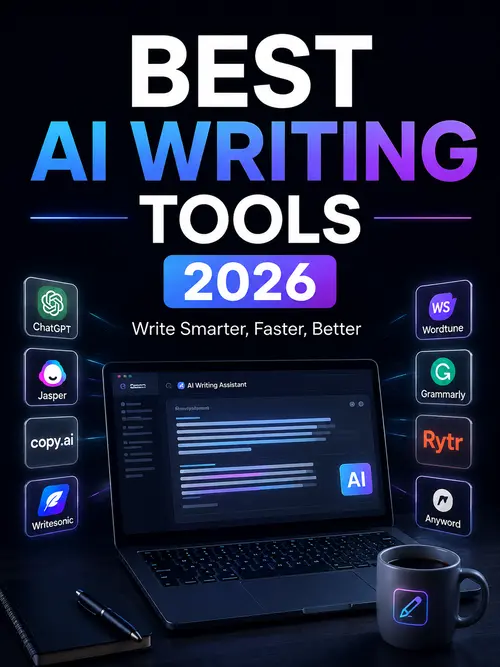
what is the best ai to write a book
If you are looking for the best free AI tools for writing a book in 2026, Claude is a powerful choice for drafting long-form content and maintaining narrative coherence across chapters; its context window is particularly effective for managing character notes, outlines, and lengthy manuscripts. ChatGPT is another free option well-suited for brainstorming story ideas, outlining, rewriting scenes, and overcoming writer’s block. Gemini is ideal for projects requiring extensive research and non-fiction content, while tools designed specifically for fiction—such as NovelCrafter and Sudowrite—offer workflows tailored to the needs of novelists.
No single AI tool stands out as the “best” choice for every writer. For fiction, priorities include handling long-form context, structuring outlines, and ensuring quality prose; for non-fiction, research capabilities and factual accuracy are paramount. While no free AI tool can generate a publication-ready book with a single click, the right tool can significantly accelerate the processes of outlining, drafting, and refining your work.
| Tool | Best For | Free? | Main Limitation | Verdict |
|---|---|---|---|---|
| Claude | Long-form writing | Yes | Usage limits | Best overall |
| ChatGPT | Ideas & outlining | Yes | Continuity | Best for beginners |
| Gemini | Research | Yes | Fiction weaker | Best for nonfiction |
Any AI fiction writer knows how daunting writer’s block can be. You might have a brilliant story idea lingering in your mind for months, yet find yourself staring at a blank screen, struggling to craft coherent chapters or develop compelling characters.
Hiring a ghostwriter costs thousands of dollars, while paid AI fiction subscriptions often lock out new creators behind monthly paywalls before they can even determine if the service is worth the investment. This is why free AI novel writing platforms have surged in popularity across North America in 2026. These tools don’t generate a finished product with a single click; instead, they act as flexible creative partners that help you overcome writer’s block, expand brief plot snippets into full manuscripts, and maintain world-building consistency—all without breaking the bank. We tested dozens of platforms to identify seven reliable, free options that offer genuine value to AI fiction writers. We carefully evaluated the limitations of their free plans, their actual workflows, and the ideal use cases for creators.
Our curated list includes NovelCrafter, the Sudowrite free trial, NavioHQ, the free versions of ChatGPT and Gemini, Squibler (free version), and Inkfluence AI—each addressing specific pain points faced by novelists. NovelCrafter is particularly well-suited for authors of plot-rich, full-length novels; its free version allows you to create story outlines, store character backstories, and generate sequential chapters, while also tracking timelines to ensure your protagonist doesn’t suddenly change eye color halfway through the book. Sudowrite’s limited free trial remains a top choice for writers focused on literary prose, offering convenient features for rewriting scenes, adding sensory details, and brainstorming plot twists—making it an excellent option if you prioritize a vivid, immersive writing experience over rigid automation. NavioHQ is ideal for sparking quick creative inspiration; it allows you to instantly generate complete short stories and scene drafts without even creating an account, making it perfect for flash fiction or experimenting with chapter openings. ChatGPT Free handles scattered brainstorming, rough outlines, and dialogue polishing well, though you will need to manually copy and paste content to maintain narrative continuity across multiple writing sessions. Google Gemini Free offers generous generation limits and reliable world-building prompts while running smoothly in your web browser, making it a great choice for writers who value easy accessibility. Squibler’s free version provides 6,000 AI-generated words per month and structured chapter templates that guide you in building a framework before you start writing—an ideal solution for outliners who dread staring at a blank page. Inkfluence AI offers free PDF and EPUB export capabilities—a rarity among free fiction tools—allowing you to save your manuscript in a self-publishing-ready format without entering credit card details. No single tool meets every need; some impose monthly word count limits, others lack native export functions, and some enforce restrictive content policies regarding darker or niche themes.
Best AI Writing Tools for Prose
For prose writing, ChatGPT is a reliable aid for rapid brainstorming and drafting scene descriptions. It handles long-form text exceptionally well, making it a top choice for creating works with a fluid, literary prose style.
Even when the quality of AI-generated content is high, it can often feel somewhat formulaic if left unpolished. These tools generate drafts rather than finished products, so human editing and revision remain essential.
Knowing how to integrate these tools into your workflow distinguishes the amateur from the writer who actually completes a novel. A common mistake among beginners is entering a single-sentence prompt and expecting the AI to generate a complete 80,000-word novel. AI yields far better results when you provide guidance and direction. A practical workflow looks like this: use NovelCrafter or Squibler to establish your plot points, character profiles, and chapter outlines, then use Sudowrite or NavioHQ to generate scene drafts. Feed raw dialogue and messy plot holes into ChatGPT Free or Gemini Free to polish your writing style and fix logical inconsistencies. When you hit a creative block, use their brainstorming features to spark new conflicts or character arcs. Once you have completed several chapters, export the files via Inkfluence AI and import the content into your preferred word processor for editing. Remember, these outputs are merely first drafts. Every AI-assisted novelist must undertake significant revisions to infuse personal style, correct repetitive phrasing, and trim away generic, AI-typical sentences. Free plans do not support the creation of entire books without limits; you will encounter word-count caps on longer projects, so view these platforms as accelerators rather than replacements for your own creative work.
Free AI book-writing tools have permanently lowered the barrier to entry for storytellers in the US as of 2026. If you have a story burning to be told but lack the time, confidence, or budget, these seven platforms offer a zero-risk way to start writing immediately. Whether you write fantasy, romance, thrillers, or literary fiction, there is a free tool suited to your style. Start small: test two or three platforms using your existing story outline, compare the results, and choose the one that best meets your needs.
Fanfiction writers can also check our guide to the best AI tools for writing fanfiction.