By 2026, free AI writing tools have become essential for the average user in the United States, serving a wide range of needs—from student assignments and freelance content creation to marketing copy for small businesses, social media updates, and routine office documentation. Unlike earlier AI products—which often came with high price tags and limited functionality—today’s free AI writing tools are abundant and versatile, capable of efficiently generating everything from blog posts and social media copy to academic papers, email templates, and creative stories. For users, these tools drastically cut down on content creation time, eliminate repetitive and inefficient writing tasks, and boost productivity at zero cost. However, most free AI writing tools have significant drawbacks that can easily trip up the average user. Many seemingly free tools come with hidden limitations, such as undisclosed word count caps, daily generation limits, mandatory credit card registration, watermarked content, stiff or unnatural phrasing, and factual errors. Users often blindly choose trending tools without considering their specific needs, resulting in generic, unreadable content and a frustrating user experience plagued by constant pop-ups urging them to upgrade to a paid plan. This article provides a systematic guide to selecting and evaluating free AI writing tools—and mastering practical usage tips—tailored to the writing habits, linguistic standards, and professional workflows of US users, helping everyone find the right tool for their specific requirements.
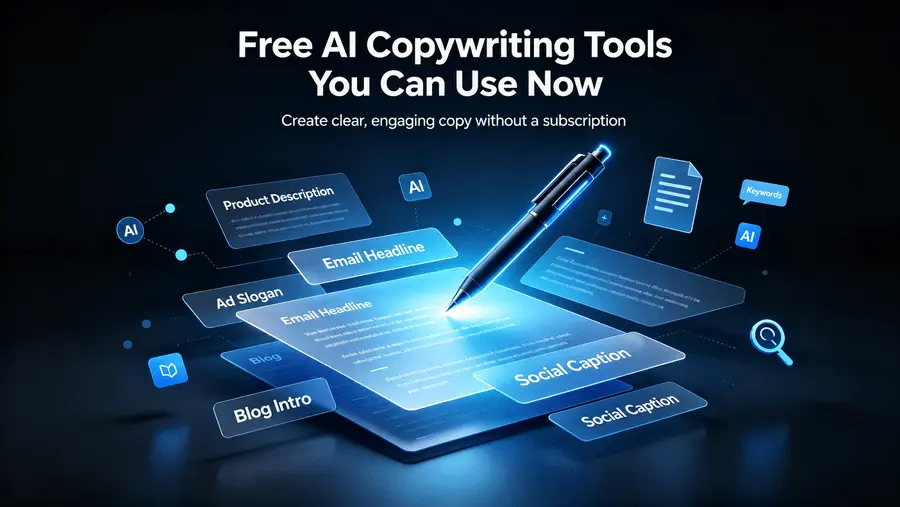
The core principle in selecting a free AI writing tool is matching the tool’s strengths to your specific use case—a crucial step that North American users often overlook, despite its significant impact on results. No single free AI writing tool is suitable for every scenario; different tools rely on distinct algorithmic models, training data, and functional focuses. If your primary need is creating long-form content—such as blog posts for a personal website, in-depth educational articles, industry white papers, or long-form essays—the free versions of ChatGPT and Claude are the top choices for North American users. Both tools excel at maintaining logical flow in long texts, ensuring natural paragraph transitions and clear, structured arguments, while avoiding the robotic phrasing common in lower-quality AI tools. For tasks requiring data-backed insights and verifiable sourcing—such as academic writing, industry analysis, and news summaries—the free version of Perplexity AI offers a unique advantage; it retrieves valid information and cites authoritative sources in real-time, effectively addressing the issues of outdated data and fabricated content often found in traditional AI models. For routine office tasks and student assignments—specifically grammar correction, sentence restructuring, and tone adjustment—the free version of Gemini is the preferred choice, supplemented by Grammarly for final checks and edits. Meanwhile, for lightweight content creation (such as social media posts, ad copy, and email subject lines) as well as text rewriting and polishing, QuillBot’s free paraphrasing tools and templates align better with the fast-paced, concise content creation style common in North America.
After identifying tools suited to specific use cases, North American users should rigorously evaluate quality based on four core criteria to avoid hidden pitfalls and select free AI writing tools that offer genuine value and comply with Google’s content guidelines. First, verify the actual capabilities of the free version; this is the fundamental screening step. High-quality free AI tools in North America do not require credit card details or paid upgrades to unlock basic features, nor do they impose forced watermarks or overly restrictive daily generation limits, making them suitable for frequent, everyday writing needs. In contrast, inferior tools often use “free” as a marketing gimmick while locking core features, severely limiting word counts per generation, and frequently displaying pop-ups to lure users into paid memberships. Second, prioritize content originality and compliance. The North American academic system and Google’s search algorithms have zero tolerance for duplicate content; plagiarism or derivative material can lead to failed assignments, drops in SEO rankings, and damage to account authority. High-quality free AI tools generate 100% original content with varied sentence structures, avoiding repetitive, template-driven phrasing. Third, ensure the tool supports authentic North American English output. Many general-purpose international tools default to British English spellings (e.g., “centre” vs. “center”) and phrasing, resulting in awkward or unnatural syntax. Tools designed for North American users allow for a fixed American English mode, ensuring the output aligns with local linguistic habits and reading preferences. Fourth, consider how well the tool fits into existing workflows; AI writing tools designed for the North American office environment typically support browser extensions and integrate seamlessly with mainstream platforms like Google Docs, WordPress, and Gmail. This eliminates the need for repetitive copy-pasting, significantly streamlining the creative process and supporting a fast-paced, efficient work routine.
After narrowing down the options, a combination of hands-on testing and using tools in tandem allows users to maximize the value of free AI writing tools and establish a long-term, efficient writing system tailored to North American needs. Relying solely on online reviews or influencer recommendations has significant limitations, as output quality can vary based on model updates and regional adaptations; direct, hands-on testing is the most reliable approach. Users can input the same writing prompt into three to five candidate tools and compare the results across four dimensions—content logic, stylistic fit, factual accuracy, and natural flow—to identify the tool that best meets their specific requirements. Furthermore, relying on a single AI tool is not recommended; the optimal free strategy involves combining multiple tools: using ChatGPT or Claude to draft long-form content, Perplexity AI to verify data and trace sources, Grammarly to refine grammar and tone, and finally, QuillBot to polish sentence structures and reduce repetition.
For US users, the advantage of free AI writing tools lies not in a multitude of features, but in stability, regulatory compliance, and suitability for specific use cases. By employing effective methods for selecting and using these tools, users can consistently produce high-quality, original content—significantly reducing writing costs and boosting efficiency—without the need for paid subscriptions to premium AI products.